Licensing Standards Across Jurisdictions and Their Influence on No Deposit Promotion Terms
Sam Long · Jul 12, 2026
Licensing Standards Across Jurisdictions and Their Influence on No Deposit Promotion Terms
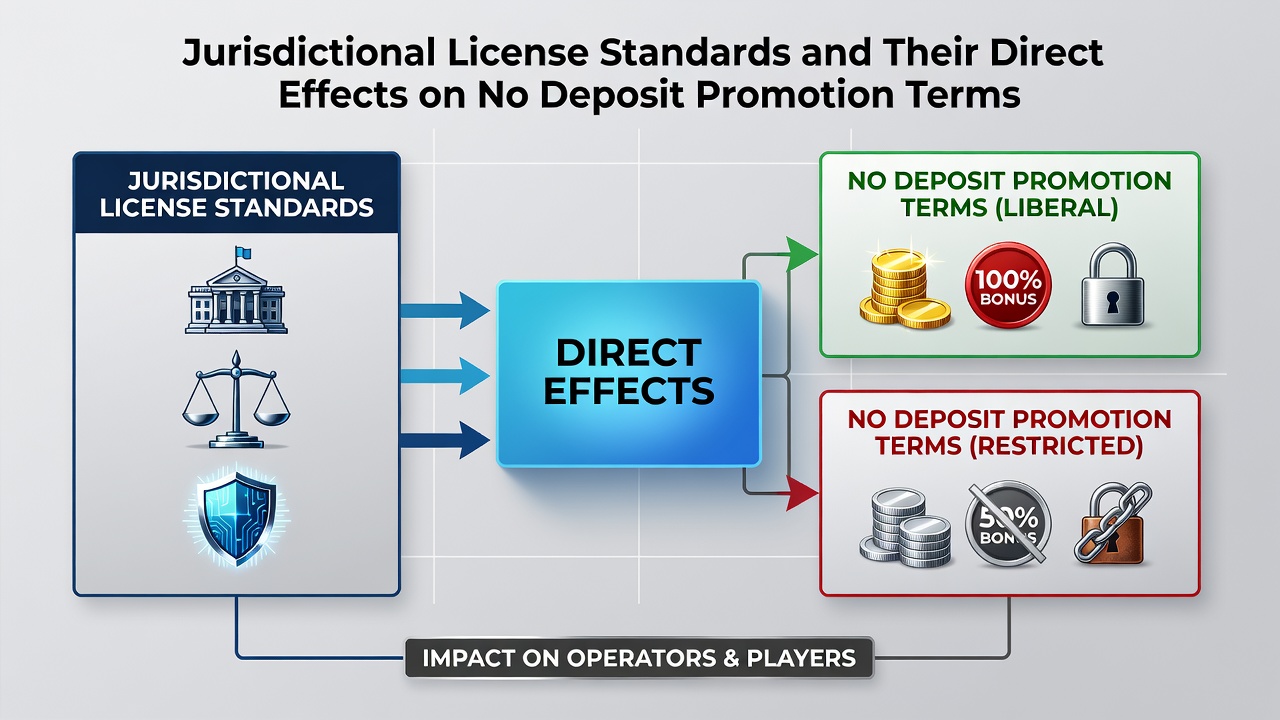
Regulatory bodies establish licensing standards that directly determine how operators structure no deposit promotions, including eligibility rules, maximum redemption amounts, and mandatory wagering thresholds. These frameworks vary by jurisdiction, yet each one imposes specific compliance requirements that shape the final terms players encounter when claiming such offers. Data from multiple regulators shows that stricter oversight often correlates with more transparent but restrictive promotion parameters, while lighter regimes permit greater flexibility in bonus design.
Core Licensing Elements That Shape Promotion Terms
Operators must satisfy financial solvency checks, player fund segregation protocols, and audit frequency mandates before receiving approval to issue any promotional credits. In practice this means no deposit offers cannot exceed limits tied to the license holder's capitalization requirements, a rule enforced through periodic reporting. Those who've examined filings from various authorities note that jurisdictions demanding quarterly compliance reviews tend to cap bonus values at lower thresholds compared to regions with annual audits only.
Player verification standards also feed directly into promotion eligibility clauses. Jurisdictions requiring full identity confirmation prior to any bonus activation force operators to embed age and location checks into the initial claim process, which eliminates certain automated bonus triggers that appear in less regulated environments. Evidence from license applications reveals these verification layers add processing steps that can delay credit issuance by several hours.
Regional Variations in Standards and Resulting Promotion Structures
European authorities apply distinct criteria that alter how no deposit terms appear on operator sites. The Malta Gaming Authority, for instance, enforces detailed responsible gaming integrations within every promotional campaign, leading to mandatory loss limits and session reminders attached to bonus playthrough. Meanwhile, authorities in Ontario require operators to publish exact wagering contributions for each game type before any promotion launches, which results in clearer but more conservative bonus multipliers across the board.
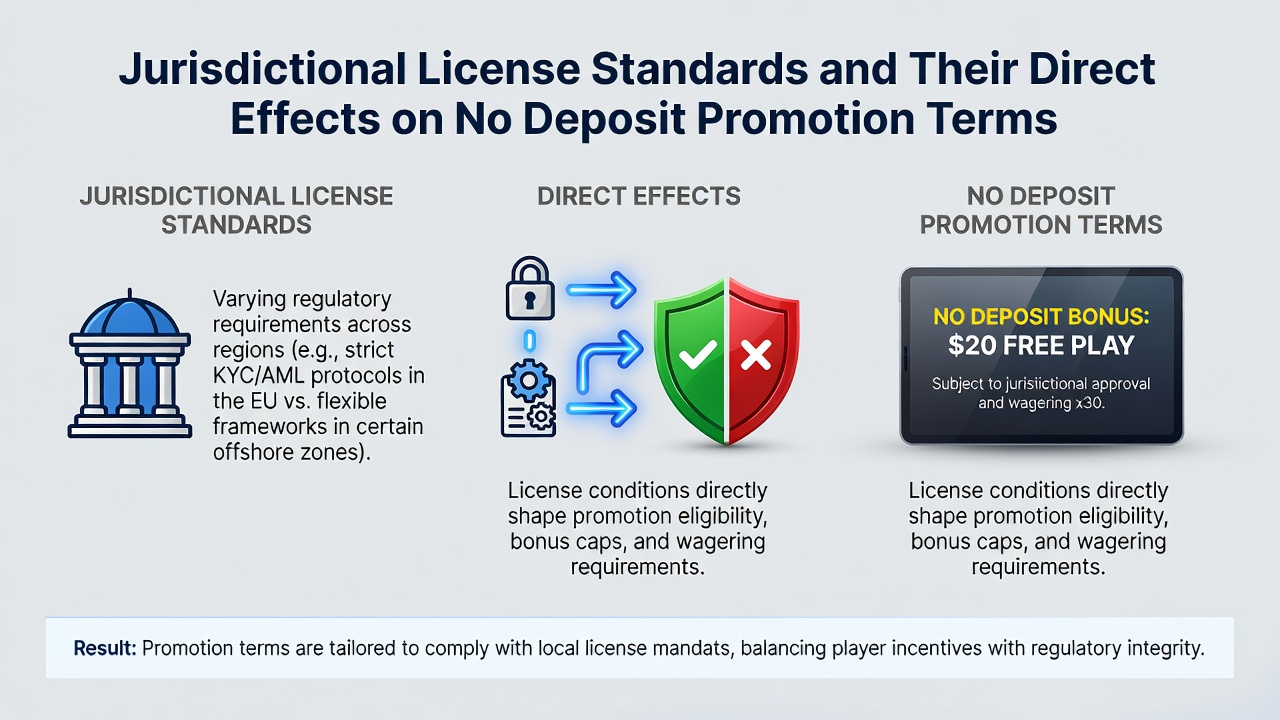
North American state-level regulators introduce additional layers through revenue reporting obligations that affect bonus expiration periods. In Nevada, license conditions tie promotion validity windows to tax filing cycles, compelling operators to align expiry dates with monthly reconciliation schedules. Observers tracking these patterns across multiple states report that such synchronization often shortens the usable timeframe for no deposit credits compared to jurisdictions without similar fiscal alignment rules.
Offshore licensing bodies maintain different emphasis points, frequently prioritizing anti-money laundering controls that restrict bonus stacking across multiple accounts. This produces terms limiting players to one active no deposit promotion per verified identity, a restriction absent in some land-based transitional frameworks. Research from industry groups indicates these controls reduce instances of bonus abuse while narrowing the overall promotional scope operators can advertise.
Compliance Reporting and Its Direct Impact on Bonus Mechanics
License holders submit detailed promotion activity logs that regulators review for fairness and solvency alignment. When authorities detect disproportionate bonus redemption rates, they may mandate adjustments to wagering requirements or game eligibility lists. Such interventions occurred in several jurisdictions during July 2026, where updated reporting templates prompted operators to revise contribution percentages for certain table games within no deposit offers.
These reporting cycles also influence how operators calculate maximum cashout caps. Jurisdictions with real-time monitoring systems require operators to flag large redemptions immediately, which translates into lower withdrawal ceilings embedded in promotion terms to avoid compliance flags. Data shared by the European Gaming and Betting Association shows consistent patterns where enhanced monitoring correlates with tighter cashout restrictions across multiple license categories.
Future Adjustments and Ongoing Regulatory Evolution
Authorities continue refining licensing criteria in response to technological shifts in game delivery and payment methods. Emerging rules around cryptocurrency promotions, for example, now require separate approval pathways that affect how no deposit bonuses funded through digital assets are structured and disclosed. Operators adapting to these changes must rewrite terms to include new disclosure language and separate playthrough tracking systems.
Conclusion
Licensing standards establish the boundaries within which no deposit promotion terms develop, from eligibility verification through redemption limits. Different jurisdictions apply unique combinations of financial, operational, and reporting requirements that produce measurable differences in bonus structures. As regulatory frameworks evolve, operators must continually align their promotional mechanics with updated compliance obligations to maintain valid licensing status.