License Transitions Reshape Promotional Offerings at Major Poker Platforms
Greta Coleman · Jun 16, 2026

License Transitions Reshape Promotional Offerings at Major Poker Platforms
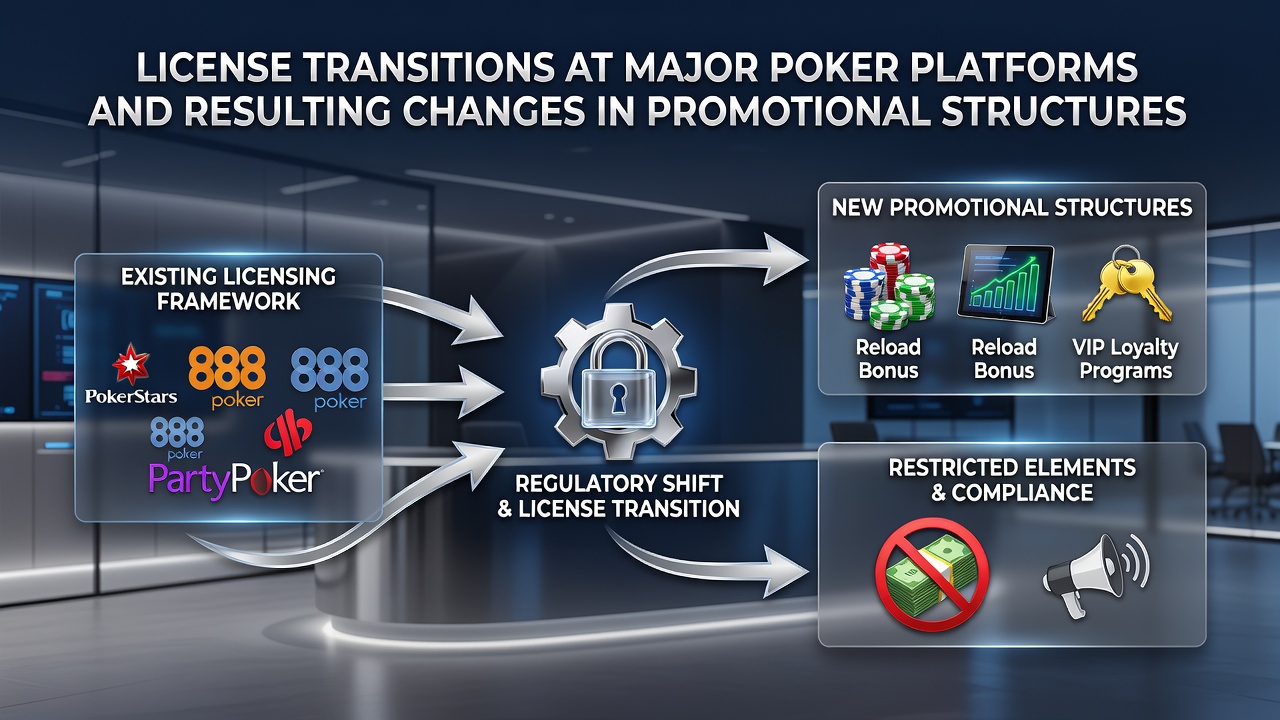
License transitions among major poker platforms have accelerated through 2025 and into 2026 as operators adapt to evolving regulatory landscapes across multiple jurisdictions; these moves often involve shifts from one licensing authority to another which in turn trigger adjustments in how promotional structures get designed and delivered to players. Data from industry reports indicates that such transitions frequently coincide with modifications to bonus eligibility rules, deposit match percentages, and loyalty program mechanics because new regulators impose distinct compliance requirements that affect marketing flexibility.
Drivers Behind Recent License Shifts
Operators have pursued license changes for reasons tied to market access, tax frameworks, and operational stability, and observers note that several prominent platforms completed moves to authorities in North America and Europe during late 2025. For instance transitions toward Pennsylvania's gaming oversight body allowed certain sites to expand real-money offerings while aligning with state-specific player protection standards that directly influence how welcome bonuses and reload promotions can be structured. Research from the American Gaming Association shows these regulatory alignments often result in tighter caps on bonus amounts alongside clearer disclosure mandates that reshape the way incentives appear in player accounts.
Meanwhile platforms operating in offshore environments have explored options with bodies such as the Kahnawake Gaming Commission to maintain broader reach, and this has led to revised promotional calendars that incorporate region-locked offers tied to the new license terms. Those who've tracked these developments point out that the process typically unfolds over several months with operators pausing certain campaigns until approvals finalize.
Adjustments to Bonus and Reward Frameworks
Once a license transition takes effect promotional structures undergo systematic reviews that address new wagering requirements, game contribution rates, and maximum cashout limits. Evidence suggests many platforms have introduced tiered bonus systems post-transition where the value of initial deposits scales according to the player's jurisdiction rather than offering uniform global deals. This approach helps satisfy varying regulatory expectations while preserving engagement across different markets.
Take one operator that shifted its primary license in early 2026 and subsequently replaced flat-rate reload bonuses with progressive match offers that unlock additional tiers after consistent play volume. Such changes maintain compliance yet require players to adapt their deposit strategies to maximize available incentives under the updated rules.
Regional Differences Emerging in June 2026
By June 2026 several platforms had finalized license transitions that produced distinct promotional variations depending on the target region. In Canadian provinces with established oversight operators introduced loyalty points that convert directly into tournament entries rather than cash bonuses to meet local guidelines on prize structures. European sites operating under fresh agreements with Maltese authorities meanwhile emphasized time-limited freerolls that tie into responsible gaming features required by the new framework.
Figures from industry analyses reveal that these regional adaptations have increased the prevalence of segmented marketing campaigns where players receive offers based on their verified location at login. The result is a more fragmented yet precisely calibrated set of incentives that reflect the specific compliance environment of each license.
Effects on Player Loyalty Programs
Loyalty and VIP structures have also evolved following license transitions because new regulators often mandate transparent tracking of player activity and clearer redemption pathways. Platforms have responded by updating point accrual rates and introducing caps on monthly redemptions that align with the operational scope permitted under the fresh license. Data indicates these modifications encourage longer-term engagement through milestone rewards instead of immediate cashback distributions that might conflict with regulatory preferences.
One study of platform behavior after similar transitions found that operators frequently expand tournament-based promotions as a compliant alternative to deposit-heavy bonuses while still delivering value that retains high-volume players. This shift maintains competitive positioning without violating the terms attached to the new licensing authority.
Conclusion
License transitions at major poker platforms continue to drive targeted revisions in promotional structures throughout 2026 with changes focused on compliance, regional segmentation, and sustainable reward models. As operators complete additional moves the patterns observed so far suggest promotional offerings will grow increasingly tailored to the specific requirements of each licensing jurisdiction while preserving opportunities for players who navigate the updated terms effectively.